
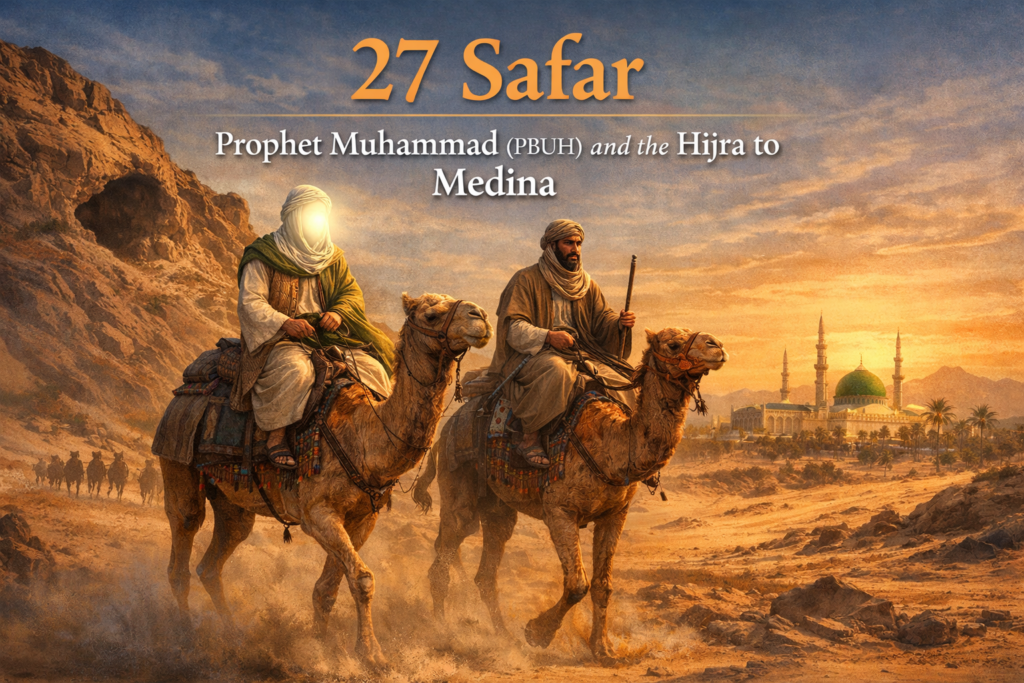
27 Safar: Prophet Muhammad (PBUH) and the Hijra to Medina
Read More: 1 Rabī‘ al-Awwal: The Fall of the Emirate of Granada
Historical Context
To understand the significance of the Hijra, we must first delve into the historical context of the time. The Prophet Muhammad (PBUH) had spent 13 years in Makkah, where he preached the message of Islam despite facing severe persecution from the Quraysh tribe and the city’s leaders. The situation had become increasingly dire for the early Muslims, and it was evident that a change was necessary for the survival and propagation of Islam.The Divine Call
In the face of mounting persecution and hostility, Prophet Muhammad (PBUH) received a divine call from Allah to migrate to Yathrib, which would later be renamed Medina (meaning “the city of the Prophet”). This call was a pivotal moment in the history of Islam and the life of the Prophet. It was a command from Allah to undertake this journey, and the Prophet understood the gravity of this task.The Hijra Journey
The Hijra journey itself was fraught with danger and challenges. The Prophet, along with his closest companion, Abu Bakr (RA), embarked on a perilous journey through the harsh Arabian desert. They had to navigate treacherous terrain, avoid capture by the Quraysh, and endure extreme conditions. This journey was not merely a physical migration; it symbolized the migration of Islam from a place of oppression to a place of freedom and opportunity.The Arrival in Medina
Upon their arrival in Medina, the Prophet Muhammad (PBUH) was warmly welcomed by the people of the city, both Muslims and non-Muslims alike. This marked the beginning of a new chapter in the history of Islam. The establishment of the first Islamic community in Medina laid the foundation for a society built on justice, tolerance, and brotherhood.Significance of the Hijra
The Hijra holds several significant lessons for Muslims and humanity as a whole:- Trust in Allah:The Hijra teaches us the importance of trusting in Allah’s guidance and following His commands, even in the face of adversity. The Prophet’s unwavering faith and obedience serve as a powerful example for believers.
- Perseverance and Determination:The Prophet’s resilience during the Hijra journey reminds us of the importance of perseverance in the face of challenges. It teaches us that with determination and trust in Allah, we can overcome seemingly insurmountable obstacles.
- Community Building:The migration to Medina led to the establishment of a diverse and inclusive Muslim community. It emphasizes the importance of unity and cooperation among believers, regardless of their backgrounds.
- Religious Freedom:The Hijra also signifies the importance of religious freedom. In Medina, the Prophet and his followers were able to practice Islam freely, and this serves as a model for societies to respect the religious rights of their citizens.
- Conflict Resolution:The Prophet’s approach to conflict resolution in Medina, which emphasized dialogue and compromise, provides valuable lessons on how to build peaceful and harmonious societies.
Conclusion
The 27th of Safar, marking the Hijra of Prophet Muhammad (PBUH) to Medina, is a significant event in Islamic history that holds enduring lessons for Muslims and humanity. It reminds us of the importance of faith, perseverance, community, religious freedom, and peaceful coexistence. The legacy of the Prophet’s migration continues to inspire and guide generations of Muslims, emphasizing the timeless values of Islam.Read More: 28 Safar: Prophet Muhammad (PBUH) Falls Ill Five Days Before His Deathعنوان: 27 صفر: رسول اللہ صلی اللہ علیہ وسلم اور ہجرت مدینہ
تعارف
27 صفر کا دن اسلامی تاریخ میں بہت اہمیت کا حامل ہے کیونکہ یہ دن پیغمبر اکرم (ص) اور ان کے ساتھیوں کی مکہ سے مدینہ ہجرت کے اہم واقعہ کی نشاندہی کرتا ہے۔ ہجرہ کے نام سے جانا جانے والا یہ واقعہ نہ صرف نبی صلی اللہ علیہ وسلم کی زندگی میں ایک اہم موڑ کی نشاندہی کرتا ہے بلکہ دنیا بھر کے مسلمانوں کے لیے قیمتی اسباق بھی رکھتا ہے۔ اس بلاگ میں، ہم پیغمبر اسلام کی مدینہ ہجرت سے تاریخی سیاق و سباق، اہمیت اور اسباق کا مطالعہ کریں گے۔
تاریخی سیاق و سباق
ہجرت کی اہمیت کو سمجھنے کے لیے ہمیں سب سے پہلے اس وقت کے تاریخی تناظر میں جھانکنا چاہیے۔ پیغمبر اسلام (ص) نے مکہ مکرمہ میں 13 سال گزارے تھے، جہاں آپ نے قبیلہ قریش اور شہر کے قائدین کی طرف سے شدید ظلم و ستم کا سامنا کرنے کے باوجود اسلام کا پیغام دیا۔ ابتدائی مسلمانوں کے لیے حالات تیزی سے گھمبیر ہوتے جا رہے تھے اور یہ ظاہر ہو رہا تھا کہ اسلام کی بقا اور تبلیغ کے لیے تبدیلی ضروری ہے۔
الٰہی پکار
بڑھتے ہوئے ظلم و ستم اور دشمنی کے عالم میں، نبی اکرم صلی اللہ علیہ وسلم کو یثرب کی طرف ہجرت کرنے کے لیے اللہ کی طرف سے الہی بلایا گیا، جس کا نام بعد میں مدینہ رکھ دیا گیا (جس کا مطلب ہے “پیغمبر کا شہر”)۔ یہ دعوت اسلام کی تاریخ اور رسول اللہ صلی اللہ علیہ وسلم کی زندگی کا ایک اہم لمحہ تھا۔ اللہ کی طرف سے اس سفر کا حکم تھا، اور نبی صلی اللہ علیہ وسلم نے اس کام کی شدت کو سمجھا۔
حجرے کا سفر
ہجرت کا سفر خود خطرات اور چیلنجوں سے بھرا ہوا تھا۔ نبی صلی اللہ علیہ وسلم نے اپنے قریبی ساتھی حضرت ابوبکر رضی اللہ عنہ کے ساتھ عرب کے سخت صحراؤں میں ایک خطرناک سفر کا آغاز کیا۔ انہیں غدار خطوں پر سفر کرنا تھا، قریش کی گرفت سے بچنا تھا، اور انتہائی حالات کو برداشت کرنا تھا۔ یہ سفر محض جسمانی ہجرت نہیں تھا۔ یہ ظلم کی جگہ سے آزادی اور موقع کی طرف اسلام کی ہجرت کی علامت ہے۔
مدینہ میں آمد
مدینہ منورہ پہنچنے پر، پیغمبر اسلام (ص) کا شہر کے لوگوں نے پرتپاک استقبال کیا، مسلم اور غیر مسلم دونوں ہی۔ اس سے اسلام کی تاریخ میں ایک نئے باب کا آغاز ہوا۔ مدینہ میں پہلی اسلامی برادری کے قیام نے انصاف، رواداری اور بھائی چارے پر مبنی معاشرے کی بنیاد رکھی۔
ہجرت کی اہمیت
حجرہ مسلمانوں اور پوری انسانیت کے لیے کئی اہم اسباق رکھتا ہے:
اللہ پر بھروسہ: ہجرت ہمیں مشکل حالات میں بھی اللہ کی رہنمائی اور اس کے احکامات پر عمل کرنے کی اہمیت سکھاتی ہے۔ پیغمبر کا غیر متزلزل ایمان اور اطاعت اہل ایمان کے لیے ایک طاقتور نمونہ ہے۔
استقامت اور عزم: ہجرت کے سفر کے دوران پیغمبر کی لچک ہمیں چیلنجوں کے مقابلہ میں ثابت قدمی کی اہمیت کی یاد دلاتی ہے۔ یہ ہمیں سکھاتا ہے کہ اللہ پر عزم اور بھروسے کے ساتھ، ہم بظاہر ناقابل تسخیر رکاوٹوں پر قابو پا سکتے ہیں۔
کمیونٹی کی تعمیر: مدینہ کی طرف ہجرت ایک متنوع اور جامع مسلم کمیونٹی کے قیام کا باعث بنی۔ یہ مومنین کے درمیان اتحاد اور تعاون کی اہمیت پر زور دیتا ہے، چاہے ان کے پس منظر کچھ بھی ہوں۔
مذہبی آزادی: ہجرہ مذہبی آزادی کی اہمیت کو بھی ظاہر کرتا ہے۔ مدینہ میں، پیغمبر اور ان کے پیروکار آزادانہ طور پر اسلام پر عمل کرنے کے قابل تھے، اور یہ معاشروں کے لیے اپنے شہریوں کے مذہبی حقوق کا احترام کرنے کا ایک نمونہ ہے۔
تنازعات کا حل: مدینہ میں تنازعات کے حل کے لیے پیغمبر کا نقطہ نظر، جس میں بات چیت اور سمجھوتہ پر زور دیا گیا، پرامن اور ہم آہنگ معاشروں کی تعمیر کے بارے میں قیمتی سبق ملتا ہے۔
نتیجہ
27 صفر، پیغمبر اسلام (ص) کے مدینہ منورہ کے ہجرت کا دن، اسلامی تاریخ کا ایک اہم واقعہ ہے جو مسلمانوں اور انسانیت کے لیے لازوال اسباق رکھتا ہے۔ یہ ہمیں ایمان، استقامت، برادری، مذہبی آزادی، اور پرامن بقائے باہمی کی اہمیت کی یاد دلاتا ہے۔ پیغمبر کی ہجرت کا ورثہ مسلمانوں کی نسلوں کو تحریک اور رہنمائی فراہم کرتا ہے، اسلام کی لازوال اقدار پر زور دیتا ہے۔