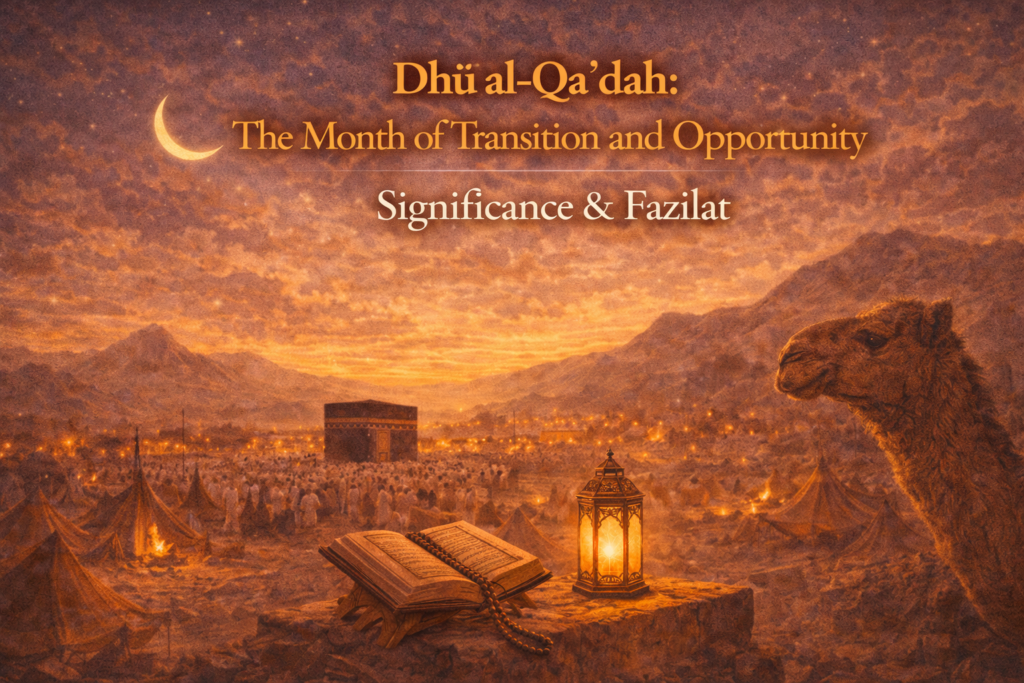
Dhū al-Qa‘dah: The Month of Transition and Opportunity – Significance and Fazilat
Introduction:
Dhū al-Qa‘dah, the eleventh month of the Islamic lunar calendar, is a period of transition and spiritual significance in the Islamic tradition. While it may not be as well-known as some other Islamic months, it holds its own unique importance and virtues. In this SEO-friendly blog, we will explore the significance of Dhū al-Qa‘dah and the fazilat (virtues) associated with this sacred month, helping us understand its place in the Islamic calendar.
Read More: Ramadan: The Month of Spiritual Transformation – Significance and Fazilat
Significance of Dhū al-Qa‘dah:
- Transition to the Sacred Months: Dhū al-Qa‘dah serves as a transition month between the three sacred months of Dhū al-Qi‘dah, Dhū al-Ḥijjah, and Muḥarram. These months hold special religious significance, and Dhū al-Qa‘dah serves as a bridge, allowing Muslims to prepare for the upcoming sacred period.
- Prohibition of Warfare: Like its neighboring sacred months, Dhū al-Qa‘dah is a time when warfare and violence are prohibited in Islam. This serves to promote peace, security, and a sense of sacredness during this period.
- Opportunity for Spiritual Growth: Dhū al-Qa‘dah offers Muslims a chance to engage in acts of worship, self-reflection, and personal growth. It is a time to strengthen their faith and prepare for the religious observances that will follow in the sacred months
Fazilat (Virtue) of Dhū al-Qa‘dah:
- Increased Acts of Worship: Muslims are encouraged to intensify their acts of worship during Dhū al-Qa‘dah. This includes additional prayers, Quranic recitation, and seeking Allah’s blessings and guidance.
- Seeking Forgiveness: Dhū al-Qa‘dah provides an opportunity for Muslims to seek forgiveness for their sins and turn to Allah in repentance. It is a time to cleanse the soul and seek His mercy.
- Charity and Acts of Kindness: Just as in other months, acts of charity (Sadaqah) and helping those in need are highly recommended during Dhū al-Qa‘dah. Sharing blessings and practicing kindness are virtuous acts.
- Self-Reflection and Self-Improvement: Dhū al-Qa‘dah encourages Muslims to engage in self-reflection, identify areas for improvement, and work on their character and conduct.
The Legacy of Dhū al-Qa‘dah:
In conclusion, Dhū al-Qa‘dah may not be as widely celebrated as some other Islamic months, but its significance and virtues should not be underestimated. It serves as a bridge between ordinary months and the sacred months of the Islamic calendar. By focusing on increased acts of worship, seeking forgiveness, practicing charity and kindness, and engaging in self-reflection, Muslims can use this month to strengthen their faith and prepare for the religious observances of the sacred months. Just as Dhū al-Qa‘dah marks a transition in the lunar calendar, it offers a chance for believers to transition into a period of spiritual growth, self-improvement, and deepened devotion to Allah.
Read More: Dhū al-Ḥijjah: The Month of Pilgrimage and Spiritual Renewal – Significance and Fazilat
عنوان: ذوالقعدہ: تبدیلی اور مواقع کا مہینہ – اہمیت اور فضیلت
تعارف:
ذی القعدہ، اسلامی قمری تقویم کا گیارہواں مہینہ، اسلامی روایت میں تبدیلی اور روحانی اہمیت کا دور ہے۔ اگرچہ یہ کچھ دوسرے اسلامی مہینوں کی طرح معروف نہیں ہے، لیکن اس کی اپنی منفرد اہمیت اور فضیلت ہے۔ اس SEO دوستانہ بلاگ میں، ہم ذوالقعدہ کی اہمیت اور اس مقدس مہینے سے وابستہ فضیلت کا مطالعہ کریں گے، اسلامی کیلنڈر میں اس کے مقام کو سمجھنے میں ہماری مدد کریں گے۔
ذوالقعدہ کی اہمیت:
مقدس مہینوں میں منتقلی: ذی القعدہ تین مقدس مہینوں ذی القعدہ، ذی الحجہ اور محرم کے درمیان منتقلی کے مہینے کے طور پر کام کرتا ہے۔ یہ مہینے خاص مذہبی اہمیت رکھتے ہیں، اور ذوالقعدہ ایک پل کا کام کرتا ہے، جو مسلمانوں کو آنے والے مقدس دور کے لیے تیاری کرنے کی اجازت دیتا ہے۔
جنگ کی ممانعت: اس کے پڑوسی مقدس مہینوں کی طرح، ذی القعدہ ایک ایسا وقت ہے جب اسلام میں جنگ اور تشدد کی ممانعت ہے۔ یہ اس مدت کے دوران امن، سلامتی، اور تقدس کے احساس کو فروغ دینے کا کام کرتا ہے۔
روحانی ترقی کا موقع: ذوالقعدہ مسلمانوں کو عبادات، خود عکاسی اور ذاتی ترقی میں مشغول ہونے کا موقع فراہم کرتا ہے۔ یہ ان کے عقیدے کو مضبوط کرنے اور مقدس مہینوں میں ہونے والی مذہبی تقریبات کے لیے تیاری کرنے کا وقت ہے۔
ذوالقعدہ کی فضیلت:
عبادات کے بڑھتے ہوئے اعمال: مسلمانوں کو ذوالقعدہ کے دوران اپنی عبادات کو تیز کرنے کی ترغیب دی جاتی ہے۔ اس میں اضافی دعائیں، قرآنی تلاوت، اور اللہ سے برکت اور رہنمائی حاصل کرنا شامل ہے۔
استغفار: ذوالقعدہ مسلمانوں کو اپنے گناہوں کی معافی مانگنے اور اللہ کی طرف توبہ کرنے کا موقع فراہم کرتا ہے۔ یہ روح کو پاک کرنے اور اس کی رحمت تلاش کرنے کا وقت ہے۔
صدقہ اور احسان کے اعمال: دوسرے مہینوں کی طرح ذی القعدہ میں بھی صدقہ اور ضرورت مندوں کی مدد کی بہت زیادہ سفارش کی جاتی ہے۔ برکتیں بانٹنا اور احسان کرنا نیک اعمال ہیں۔
خود کی عکاسی اور خود کو بہتر بنانا: ذوالقعدہ مسلمانوں کو خود غور و فکر کرنے، بہتری کے شعبوں کی نشاندہی کرنے اور اپنے کردار اور طرز عمل پر کام کرنے کی ترغیب دیتا ہے۔
ذوالقعدہ کی میراث:
آخر میں، ذی القعدہ شاید دیگر اسلامی مہینوں کی طرح وسیع پیمانے پر نہیں منایا جاتا ہے، لیکن اس کی اہمیت اور فضیلت کو کم نہیں سمجھا جانا چاہیے۔ یہ عام مہینوں اور اسلامی کیلنڈر کے مقدس مہینوں کے درمیان ایک پل کا کام کرتا ہے۔ عبادات میں اضافہ، استغفار، خیرات اور احسان کی مشق، اور خود غور و فکر میں مشغول ہونے پر توجہ مرکوز کرتے ہوئے، مسلمان اس مہینے کو اپنے ایمان کو مضبوط کرنے اور مقدس مہینوں کی مذہبی تقریبات کی تیاری کے لیے استعمال کر سکتے ہیں۔ جس طرح ذوالقعدہ قمری کیلنڈر میں ایک تبدیلی کی نشاندہی کرتا ہے، اسی طرح یہ مومنین کے لیے روحانی ترقی، خود کی بہتری اور اللہ کے لیے گہری عقیدت کے دور میں منتقلی کا موقع فراہم کرتا ہے۔