
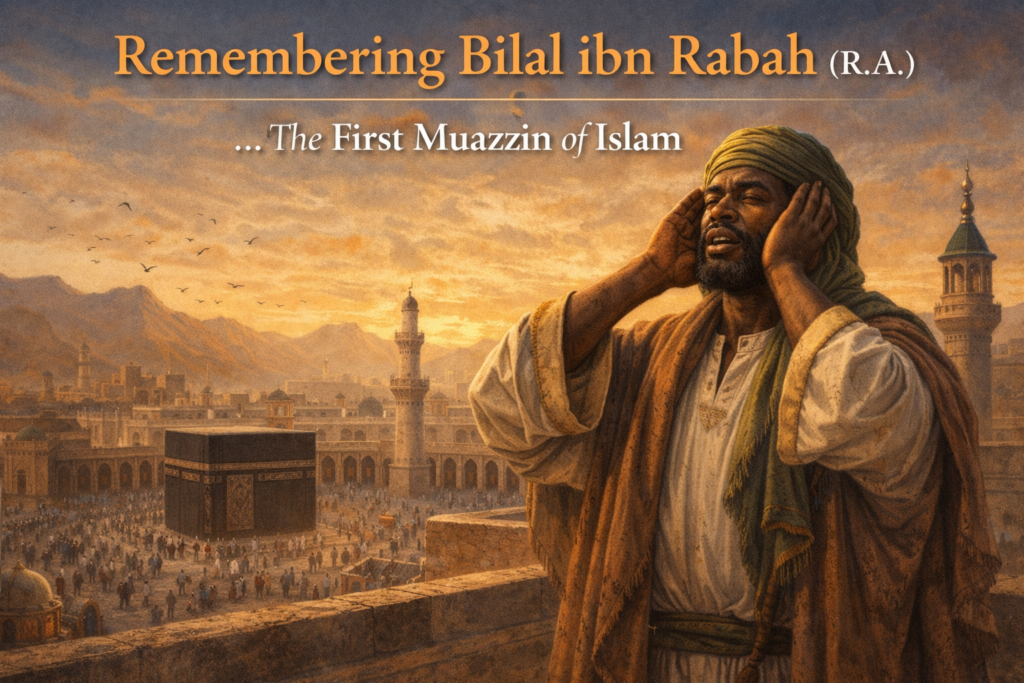
Remembering Bilal Ibn Rabah (R.A): The First Muazzin of Islam
Introduction
The history of Islam is rich with the inspiring stories of individuals who contributed significantly to the early Muslim community. Among these remarkable figures stands Bilal Ibn Rabah (R.A), a name synonymous with unwavering faith and devotion. Bilal (R.A) holds the esteemed title of being the first Muazzin of Islam, and his life and legacy continue to inspire Muslims around the world. In this blog, we will commemorate the life and the eventual passing of Bilal (R.A).
Read More: 28 Safar: Prophet Muhammad (PBUH) Falls Ill Five Days Before His Death
The Early Life of Bilal Ibn Rabah (R.A)
Bilal Ibn Rabah (R.A) was born into slavery in Mecca, in the late 6th century CE. His parents were originally from Ethiopia, and he spent his early years subjected to the harsh conditions of servitude. Despite the adversity he faced, Bilal (R.A) stood out due to his unwavering faith in the oneness of Allah.
Conversion to Islam
Bilal’s (R.A) life took a remarkable turn when he encountered the message of Islam through the teachings of the Prophet Muhammad (peace be upon him). The message of monotheism, equality, and justice resonated deeply with him, and he embraced Islam without hesitation. This conversion marked the beginning of a remarkable journey.
The Role of Bilal (R.A) as the First Muazzin
Bilal’s (R.A) significance in the early days of Islam is most prominently associated with his role as the first Muazzin (the one who calls to prayer). His appointment to this position carries profound historical and spiritual significance:
- The Call to Prayer: The Prophet Muhammad (peace be upon him) recognized Bilal’s (R.A) melodious and powerful voice. He entrusted him with the responsibility of calling the Adhan (the call to prayer), a role that required a clear, strong voice to summon the faithful to worship.
- Spiritual Significance: Bilal’s (R.A) call to prayer became an integral part of the daily lives of Muslims, signifying the call to faith, unity, and submission to the one true God. His voice resonated across the streets of Mecca, inviting people to embrace Islam.
- Symbol of Equality: Bilal’s (R.A) elevation to the esteemed position of the first Muazzin is a testament to Islam’s stance on equality. Regardless of his humble background as a former slave, he was given a position of honor and respect within the Muslim community.
The End of Bilal’s (R.A) Life
Bilal Ibn Rabah (R.A) spent a significant portion of his life serving Islam and the Muslim community. His unwavering faith and devotion remained unshaken even in the face of adversity. Bilal (R.A) witnessed and participated in numerous pivotal events in Islamic history, including the migration to Medina and the Battle of Badr.
As he grew older, Bilal (R.A) longed to visit the city of Medina, where the Prophet Muhammad (peace be upon him) had migrated to. Finally, his wish was fulfilled, and he traveled to Medina. He spent his last days in the city, continuing to inspire the community with his stories of faith and dedication.
Bilal Ibn Rabah (R.A) passed away in the year 640 CE, leaving behind a legacy of unwavering faith, devotion to Allah, and a profound commitment to the message of Islam.
Legacy and Inspiration
The life of Bilal Ibn Rabah (R.A) serves as a timeless source of inspiration for Muslims and all those who appreciate the values of faith, equality, and justice. His role as the first Muazzin exemplifies the importance of the call to prayer in Islam, while his journey from slavery to a position of honor showcases the transformative power of faith. Bilal (R.A) remains a symbol of unwavering devotion to Allah and the enduring legacy of the early Muslim community.
Read More: Battle of Karbala: Prisoners Enter Yazid’s Palace
عنوان: بلال بن رباح رضی اللہ عنہ کی یاد: اسلام کے پہلے مؤذن
تعارف
اسلام کی تاریخ ان افراد کی متاثر کن کہانیوں سے مالا مال ہے جنہوں نے ابتدائی مسلم کمیونٹی میں نمایاں کردار ادا کیا۔ ان قابل ذکر شخصیات میں بلال ابن رباح (رضی اللہ عنہ) بھی ہیں، جو ایک ایسا نام ہے جو اٹل ایمان اور عقیدت کا مترادف ہے۔ بلال (رضی اللہ عنہ) کو اسلام کے پہلے مؤذن ہونے کا اعزاز حاصل ہے، اور ان کی زندگی اور میراث دنیا بھر کے مسلمانوں کو متاثر کرتی رہتی ہے۔ اس بلاگ میں ہم بلال (رضی اللہ عنہ) کی زندگی اور ان کے انتقال کو یاد کریں گے۔
بلال بن رباح رضی اللہ عنہ کی ابتدائی زندگی
بلال ابن رباح (رضی اللہ عنہ) چھٹی صدی عیسوی کے آخر میں مکہ میں غلامی میں پیدا ہوئے۔ اس کے والدین کا تعلق اصل میں ایتھوپیا سے تھا، اور اس نے اپنے ابتدائی سال غلامی کے سخت حالات میں گزارے۔ ان مشکلات کے باوجود بلال رضی اللہ عنہ اللہ کی وحدانیت پر اپنے اٹل ایمان کی وجہ سے کھڑے رہے۔
اسلام قبول کرنا
بلال (رضی اللہ عنہ) کی زندگی نے ایک قابل ذکر موڑ لیا جب ان کا سامنا رسول اللہ صلی اللہ علیہ وسلم کی تعلیمات کے ذریعے اسلام کے پیغام سے ہوا۔ توحید، مساوات اور عدل کا پیغام ان کے دل کی گہرائیوں سے گونجتا رہا، اور انہوں نے بغیر کسی ہچکچاہٹ کے اسلام قبول کیا۔ اس تبدیلی نے ایک شاندار سفر کا آغاز کیا۔
بلال رضی اللہ عنہ کا کردار اولین مؤذن
اسلام کے ابتدائی ایام میں بلال (رضی اللہ عنہ) کی اہمیت سب سے نمایاں طور پر ان کے پہلے مؤذن (نماز کے لیے پکارنے والے) کے کردار سے وابستہ ہے۔ اس عہدے پر ان کی تقرری گہری تاریخی اور روحانی اہمیت رکھتی ہے:
اذان: رسول اللہ صلی اللہ علیہ وسلم نے بلال رضی اللہ عنہ کی سریلی اور زوردار آواز کو پہچان لیا۔ اس نے اسے اذان (نماز کی اذان) کی ذمہ داری سونپی، ایک ایسا کردار جس کے لیے وفاداروں کو عبادت کے لیے بلانے کے لیے ایک واضح، مضبوط آواز کی ضرورت تھی۔
روحانی اہمیت: بلال (رضی اللہ عنہ) کی اذان مسلمانوں کی روزمرہ کی زندگی کا ایک لازمی حصہ بن گئی، جو ایمان، اتحاد، اور ایک حقیقی خدا کے سامنے سر تسلیم خم کرنے کی طرف اشارہ کرتی ہے۔ اس کی آواز مکہ کی گلیوں میں گونج رہی تھی، لوگوں کو اسلام قبول کرنے کی دعوت دیتی تھی۔
مساوات کی علامت: بلال (رضی اللہ عنہ) کا پہلے مؤذن کے محترم مقام پر فائز ہونا مساوات کے بارے میں اسلام کے موقف کی دلیل ہے۔ ایک سابق غلام کے طور پر اس کے عاجزانہ پس منظر سے قطع نظر، اسے مسلم کمیونٹی کے اندر عزت اور احترام کا مقام دیا گیا۔
بلال رضی اللہ عنہ کی زندگی کا خاتمہ
بلال ابن رباح (رضی اللہ عنہ) نے اپنی زندگی کا ایک اہم حصہ اسلام اور امت مسلمہ کی خدمت میں گزارا۔ مشکلات میں بھی ان کا غیر متزلزل ایمان اور عقیدت غیر متزلزل رہی۔ بلال (رضی اللہ عنہ) نے اسلامی تاریخ کے متعدد اہم واقعات کو دیکھا اور ان میں حصہ لیا، جن میں مدینہ کی طرف ہجرت اور جنگ بدر شامل ہیں۔
جیسے جیسے وہ بڑے ہوئے، بلال (رضی اللہ عنہ) نے مدینہ کے شہر کا دورہ کرنا چاہا، جہاں نبی اکرم صلی اللہ علیہ وسلم نے ہجرت کی تھی۔ آخرکار اس کی خواہش پوری ہوئی اور وہ مدینہ کی طرف روانہ ہو گئے۔ اس نے اپنے آخری ایام شہر میں گزارے، اپنے ایمان اور لگن کی کہانیوں سے کمیونٹی کو متاثر کرتے رہے۔
بلال ابن رباح (رضی اللہ عنہ) سنہ 640 عیسوی میں انتقال کر گئے، وہ اپنے پیچھے غیر متزلزل ایمان، اللہ سے لگن اور اسلام کے پیغام سے گہری وابستگی کی میراث چھوڑ گئے۔
میراث اور الہام
بلال ابن رباح (رضی اللہ عنہ) کی زندگی مسلمانوں اور ان تمام لوگوں کے لیے جو ایمان، مساوات اور انصاف کی قدروں کو سراہتے ہیں، ایک لازوال الہام کے طور پر کام کرتی ہے۔ پہلے مؤذن کے طور پر ان کا کردار اسلام میں اذان کی اہمیت کو واضح کرتا ہے، جبکہ غلامی سے عزت کے مقام تک ان کا سفر ایمان کی تبدیلی کی طاقت کو ظاہر کرتا ہے۔ بلال (رضی اللہ عنہ) اللہ کے لیے غیر متزلزل عقیدت اور ابتدائی مسلم کمیونٹی کی پائیدار میراث کی علامت ہیں۔




English Maariful Quran Volume 4 by Mufti Muhammad Shafi Usmani (R.A.) – English Translation and Tafseer Book Cover
English Maariful Quran Volume 4 – Tafseer by Mufti Muhammad Shafi Usmani (R.A.)
Read more