
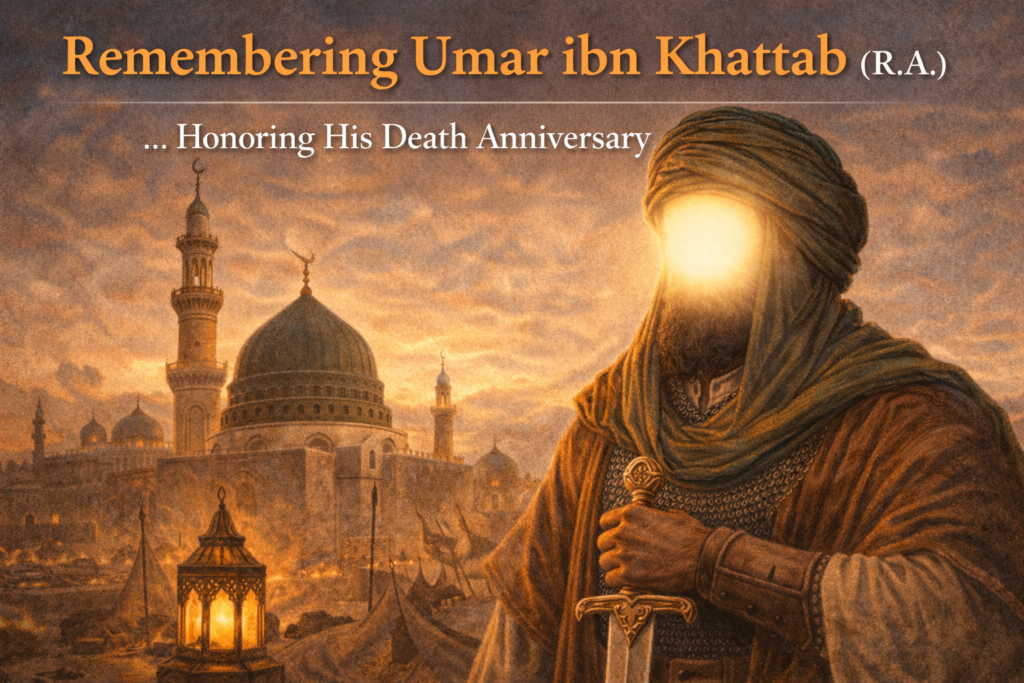
Remembering Umar Ibn Khattab (R.A): Honoring His Death Anniversary
Introduction
The 3rd of Dhu al-Hijjah marks a significant date in Islamic history, a day when Muslims around the world commemorate the death anniversary of one of the most revered figures in Islam, Umar Ibn Khattab (R.A). Umar Ibn Khattab, also known as Umar al-Farooq, was the second Caliph of Islam after the death of the Prophet Muhammad (peace be upon him). His life, principles, and legacy continue to inspire millions of Muslims globally. In this blog, we will delve into the life of Umar Ibn Khattab (R.A) and reflect on the significance of his death anniversary.Read More: Battle of Karbala: Prisoners Enter Yazid’s Palace
The Life of Umar Ibn Khattab (R.A)
Umar Ibn Khattab (R.A) was born in approximately 584 CE in the city of Mecca, a few years after the birth of the Prophet Muhammad (peace be upon him). His pre-Islamic life was marked by strength, leadership, and shrewdness. However, it was after embracing Islam that his character transformed remarkably.- Conversion to Islam: Umar Ibn Khattab (R.A) converted to Islam in the early years of the prophethood. His conversion was a pivotal moment in Islamic history, as it significantly strengthened the Muslim community. The Prophet Muhammad (peace be upon him) once prayed for the conversion of either Umar or Abu Jahl, and it was Umar who embraced Islam.
- Tenure as the Second Caliph: After the death of the first Caliph, Abu Bakr (R.A), Umar Ibn Khattab (R.A) was chosen as the second Caliph. His tenure as Caliph is characterized by remarkable achievements, including the expansion of the Islamic empire and the establishment of a just and efficient administrative system.
- Justice and Equality: Umar (R.A) was known for his unwavering commitment to justice and equality. He implemented various reforms to ensure that justice was accessible to all, regardless of their social or economic status. His famous saying, “Even if a lamb were to trip in Iraq, I would be held responsible for it,” reflects his sense of responsibility and accountability.
- Contributions to Islamic Jurisprudence: Umar Ibn Khattab (R.A) played a pivotal role in the development of Islamic jurisprudence. He consulted with scholars and companions to formulate legal judgments (fatwas) that continue to influence Islamic law today.
- Social Welfare: He established a comprehensive social welfare system that provided for the needs of the poor and vulnerable in society. This included the institution of stipends (known as ‘Aata’) for those in need.
Significance of Umar Ibn Khattab’s (R.A) Death Anniversary
The death anniversary of Umar Ibn Khattab (R.A) is a time for reflection and remembrance. It holds great importance for several reasons:- Inspiration for Leadership: Umar’s (R.A) leadership qualities, wisdom, and sense of justice serve as a timeless source of inspiration for leaders in both the Muslim and non-Muslim world. His ability to make difficult decisions for the greater good is a lesson in leadership.
- Islamic Governance: His tenure as Caliph is often regarded as a model of Islamic governance. His principles of justice, accountability, and public welfare remain relevant in contemporary discussions on governance.
- Justice and Equality: Umar’s (R.A) commitment to justice and equality serves as a reminder of the core values of Islam. Muslims today are encouraged to emulate his sense of fairness and justice in their daily lives.
- Social Responsibility: The establishment of a social welfare system by Umar (R.A) highlights the importance of social responsibility in Islam. Muslims are reminded of their duty to help those in need and work towards the betterment of society.
Conclusion
The death anniversary of Umar Ibn Khattab (R.A) is a time for Muslims to remember and reflect on the life and legacy of this remarkable leader. His contributions to Islam, justice, and governance continue to inspire generations. By honoring his memory, we are reminded of the timeless values of justice, equality, and social responsibility that are at the core of Islamic teachings. Umar Ibn Khattab (R.A) remains an enduring symbol of leadership and righteousness in the history of Islam, and his legacy lives on in the hearts of millions.Read More: Hussain Ibn Ali (R.A): The Courageous Stand at Karbala
عنوان: عمر بن خطاب رضی اللہ عنہ کی یاد: ان کے یوم وفات پر تعظیم
تعارف
3 ذی الحجہ اسلامی تاریخ میں ایک اہم تاریخ کی نشاندہی کرتی ہے، ایک ایسا دن جب دنیا بھر کے مسلمان اسلام کی سب سے قابل احترام شخصیات میں سے ایک، عمر ابن خطاب (رضی اللہ عنہ) کی برسی مناتے ہیں۔ عمر ابن خطاب، جسے عمر الفاروق کے نام سے بھی جانا جاتا ہے، رسول اللہ صلی اللہ علیہ وسلم کی وفات کے بعد اسلام کے دوسرے خلیفہ تھے۔ ان کی زندگی، اصول اور میراث عالمی سطح پر لاکھوں مسلمانوں کو متاثر کرتی رہتی ہے۔ اس بلاگ میں ہم عمر بن خطاب رضی اللہ عنہ کی زندگی کا جائزہ لیں گے اور ان کی برسی کی اہمیت پر غور کریں گے۔عمر بن خطاب رضی اللہ عنہ کی زندگی
عمر بن خطاب (رضی اللہ عنہ) تقریباً 584 عیسوی میں شہر مکہ میں پیدا ہوئے، جو کہ نبی اکرم صلی اللہ علیہ وسلم کی ولادت کے چند سال بعد تھے۔ ان کی اسلام سے پہلے کی زندگی طاقت، قیادت اور ہوشیاری سے نمایاں تھی۔ تاہم اسلام قبول کرنے کے بعد ان کے کردار میں نمایاں تبدیلی آئی۔اسلام قبول کرنا: عمر بن خطاب رضی اللہ عنہ نے نبوت کے ابتدائی سالوں میں اسلام قبول کیا۔ ان کی تبدیلی اسلامی تاریخ کا ایک اہم لمحہ تھا، کیونکہ اس نے مسلم کمیونٹی کو نمایاں طور پر مضبوط کیا۔ رسول اللہ صلی اللہ علیہ وسلم نے ایک بار عمر یا ابوجہل میں سے کسی ایک کے اسلام قبول کرنے کی دعا کی اور یہ عمر ہی تھے جنہوں نے اسلام قبول کیا۔خلیفہ ثانی کی مدت: خلیفہ اول حضرت ابوبکر رضی اللہ عنہ کی وفات کے بعد عمر بن خطاب رضی اللہ عنہ کو خلیفہ ثانی منتخب کیا گیا۔ خلیفہ کے طور پر ان کے دور میں اسلامی سلطنت کی توسیع اور ایک منصفانہ اور موثر انتظامی نظام کے قیام سمیت قابل ذکر کامیابیوں کی خصوصیت ہے۔انصاف اور مساوات: عمر رضی اللہ عنہ انصاف اور مساوات کے لیے اپنی غیر متزلزل وابستگی کے لیے مشہور تھے۔ اس نے اس بات کو یقینی بنانے کے لیے مختلف اصلاحات نافذ کیں کہ انصاف سب کے لیے قابل رسائی ہو، چاہے ان کی سماجی یا معاشی حیثیت کچھ بھی ہو۔ ان کا مشہور قول، “اگر ایک بھیڑ کا بچہ عراق میں بھی جائے تو میں اس کا ذمہ دار ٹھہروں گا،” اس کے احساس ذمہ داری اور جوابدہی کی عکاسی کرتا ہے۔اسلامی فقہ میں شراکت: عمر بن خطاب رضی اللہ عنہ نے اسلامی فقہ کی ترقی میں اہم کردار ادا کیا۔ انہوں نے علماء اور اصحاب سے مشورہ کیا کہ وہ قانونی فیصلے (فتاوے) مرتب کریں جو آج بھی اسلامی قانون پر اثر انداز ہوتے ہیں۔سماجی بہبود: اس نے ایک جامع سماجی بہبود کا نظام قائم کیا جو معاشرے کے غریبوں اور کمزوروں کی ضروریات کو پورا کرتا تھا۔ اس میں ضرورت مندوں کے لیے وظیفے کا ادارہ (جسے ‘آتا’ کہا جاتا ہے) شامل تھا۔عمر بن خطاب رضی اللہ عنہ کے یوم وفات کی اہمیت
عمر بن خطاب رضی اللہ عنہ کی برسی غور و فکر اور یاد کا وقت ہے۔ یہ کئی وجوہات کی بنا پر بہت اہمیت رکھتا ہے:قیادت کے لیے تحریک: عمر (رضی اللہ عنہ) کی قائدانہ خوبیاں، حکمت اور انصاف کا احساس مسلم اور غیر مسلم دونوں دنیا کے رہنماؤں کے لیے ایک لازوال الہام کے طور پر کام کرتا ہے۔ بڑی بھلائی کے لیے مشکل فیصلے کرنے کی اس کی صلاحیت قیادت کا سبق ہے۔اسلامی حکمرانی: ان کے خلیفہ کے دور کو اکثر اسلامی طرز حکمرانی کا نمونہ سمجھا جاتا ہے۔ ان کے انصاف، جوابدہی، اور عوامی بہبود کے اصول گورننس پر عصری مباحث میں متعلقہ رہتے ہیں۔انصاف اور مساوات: عدل اور مساوات کے لیے عمر (رضی اللہ عنہ) کا عزم اسلام کی بنیادی اقدار کی یاد دہانی کا کام کرتا ہے۔ آج مسلمانوں کی حوصلہ افزائی کی جاتی ہے کہ وہ اپنی روزمرہ کی زندگی میں انصاف اور انصاف کے اس کے احساس کی تقلید کریں۔سماجی ذمہ داری: عمر (رضی اللہ عنہ) کی طرف سے سماجی بہبود کے نظام کا قیام اسلام میں سماجی ذمہ داری کی اہمیت کو اجاگر کرتا ہے۔ مسلمانوں کو ان کا فرض یاد دلایا جاتا ہے کہ وہ ضرورت مندوں کی مدد کریں اور معاشرے کی بہتری کے لیے کام کریں۔نتیجہ
عمر بن خطاب رضی اللہ عنہ کی برسی مسلمانوں کے لیے اس قابل ذکر رہنما کی زندگی اور میراث کو یاد کرنے اور اس پر غور کرنے کا وقت ہے۔ اسلام، انصاف اور حکمرانی کے لیے ان کی خدمات نسلوں کو متاثر کرتی رہتی ہیں۔ ان کی یاد کا احترام کرتے ہوئے، ہمیں انصاف، مساوات، اور سماجی ذمہ داری کی لازوال اقدار کی یاد دلائی جاتی ہے جو اسلامی تعلیمات کا مرکز ہیں۔ عمر بن خطاب رضی اللہ عنہ اسلام کی تاریخ میں قیادت اور راستبازی کی ایک لازوال علامت بنے ہوئے ہیں، اور ان کی میراث لاکھوں لوگوں کے دلوں میں زندہ ہے۔Related
Related posts

March 10, 2026


March 9, 2026
English Maariful Quran Volume 4 by Mufti Muhammad Shafi Usmani (R.A.) – English Translation and Tafseer Book Cover
English Maariful Quran Volume 4 – Tafseer by Mufti Muhammad Shafi Usmani (R.A.)
Read more