
These 5 Dhikr Can change your Destiny if recited with sincerity
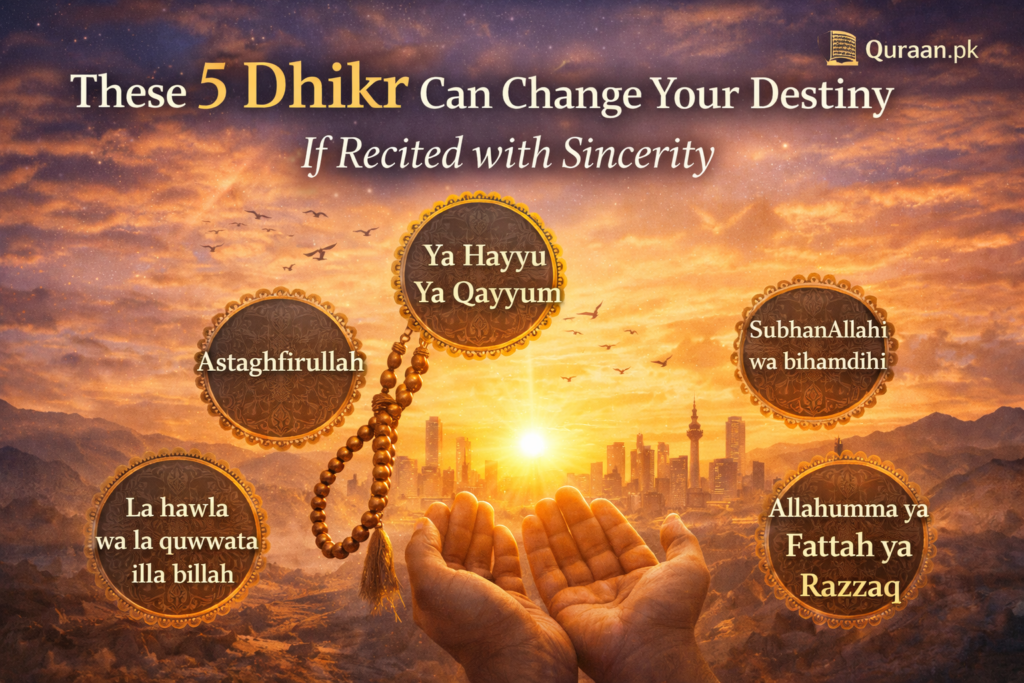
In Islam, destiny (Qadr) is not a rigid, lifeless script. While Allah’s knowledge encompasses everything, He has also given believers powerful spiritual tools to transform their lives—one of the most profound being Dhikr, the remembrance of Allah. Dhikr is not merely a repetition of words; it is a connection of the heart with the Creator. When recited with sincerity, humility, and consistency, dhikr has the power to change circumstances, soften hearts, remove hardships, and invite divine mercy.
At Quraan.pk, we emphasize Qur’anic guidance and authentic Islamic practices that nurture faith and inner peace. Among these practices, dhikr stands out as a life-changing act of worship that can alter one’s spiritual and worldly path.
Read More: Imam Ali’s Advice going into 2026
Understanding Destiny (Qadr) in Islam
Before exploring the five powerful dhikr, it is important to understand destiny in Islam. Destiny includes:
Allah’s complete knowledge of all things
Divine wisdom behind every event
The concept of dua and dhikr influencing outcomes by Allah’s will
The Prophet Muhammad ﷺ said that nothing changes destiny except dua, and dhikr is among the greatest forms of dua. When a believer remembers Allah sincerely, Allah opens doors that were previously unseen.
The Power of Sincere Dhikr
Allah says in the Qur’an:
“Verily, in the remembrance of Allah do hearts find rest.”
(Surah Ar-Ra’d 13:28)
Dhikr:
Purifies the heart
Strengthens faith
Removes anxiety
Attracts divine help
Brings barakah into life
Islamic scholars agree that sincerity (Ikhlas) is the soul of dhikr. Words recited without presence of heart bring limited benefit, but words recited with faith can transform destiny.
Dhikr 1: Astaghfirullah (Seeking Forgiveness)
Meaning:
“I seek forgiveness from Allah.”
Why It Changes Destiny
Istighfar removes barriers between a servant and Allah. Many hardships—financial, emotional, or spiritual—are linked to sins we may not even recognize.
Allah says:
“Seek forgiveness from your Lord. Indeed, He is ever a Perpetual Forgiver.”
(Surah Nuh 71:10)
The Prophet ﷺ said that constant istighfar brings relief from distress, provision from unexpected sources, and solutions to problems.
How to Practice
Recite Astaghfirullah 100 times daily
Increase during hardship
Reflect on mistakes and resolve to improve
At Quraan.pk, Qur’an translations and tafseer explain how repentance revives the soul and alters life paths.
Dhikr 2: Ya Hayyu Ya Qayyum (The Ever-Living, The Sustainer)
Meaning:
Calling upon Allah as the One who sustains all existence.
Why It Changes Destiny
This dhikr strengthens reliance on Allah. When life feels overwhelming, this remembrance reconnects the believer to the One who controls every affair.
The Prophet ﷺ frequently recited this dhikr during times of difficulty.
Benefits
Strengthens faith
Removes helplessness
Brings spiritual energy
Restores hope
How to Practice
Recite:
Ya Hayyu Ya Qayyum, bi rahmatika astagheeth
Especially after Fajr or Tahajjud, with full concentration.
Dhikr 3: SubhanAllahi wa bihamdihi (Glorification and Praise)
Meaning:
“Glory be to Allah and all praise is for Him.”
Why It Changes Destiny
This dhikr purifies sins and elevates rank. The Prophet ﷺ said:
“Whoever says SubhanAllahi wa bihamdihi 100 times, his sins will be forgiven even if they are like the foam of the sea.”
Benefits
Cleanses the heart
Brings inner peace
Attracts Allah’s pleasure
Lightens burdens
This simple dhikr is highly emphasized in authentic Islamic teachings shared at Quraan.pk.
Dhikr 4: La Hawla wa La Quwwata Illa Billah
Meaning:
“There is no power nor strength except with Allah.”
Why It Changes Destiny
This dhikr destroys arrogance and builds reliance on Allah. It reminds the believer that all strength comes from Him alone.
The Prophet ﷺ called this dhikr a treasure from the treasures of Jannah.
When to Recite
During difficulty
When facing fear or weakness
Before major decisions
It brings calmness and spiritual strength when life feels out of control.
Dhikr 5: Allahumma Ya Fattah Ya Razzaq
Meaning:
“O Allah, O Opener, O Provider.”
Why It Changes Destiny
This dhikr opens closed doors—whether related to:
Rizq (sustenance)
Employment
Marriage
Knowledge
Relief from debt
Allah is Al-Fattah, the One who opens what no one else can.
How to Practice
Recite 111 times daily after Fajr
Combine with halal effort
Trust Allah’s timing
Many scholars recommend this dhikr for those seeking lawful provision and ease.
Conditions for Dhikr to Truly Change Destiny
Dhikr changes destiny only when combined with:
Sincerity of intention
Consistency
Lawful living
Patience
Trust in Allah
Islam teaches balance—spiritual effort along with worldly responsibility.
Role of the Qur’an in Strengthening Dhikr
Dhikr rooted in Qur’anic understanding carries deeper impact. Reading and understanding the Qur’an strengthens the heart’s connection to Allah, making dhikr more meaningful.
At Quraan.pk, you can explore:
These tools help believers integrate dhikr into daily life with understanding and devotion.
Dhikr as a Lifestyle, Not a Ritual
Dhikr should not be limited to prayer mats. Imam Ibn Taymiyyah said:
“Dhikr is to the heart what water is to fish.”
A heart without remembrance struggles to survive spiritually.
Make dhikr part of:
Morning routines
Commutes
Work breaks
Moments of stress
This consistent remembrance transforms destiny gradually but powerfully.
Conclusion: Let Dhikr Rewrite Your Story
Destiny is shaped by Allah’s wisdom, but He invites His servants to turn to Him through dhikr and dua. These five dhikr, when recited with sincerity, humility, and faith, can soften hardships, open doors, and bring tranquility to the heart.
At Quraan.pk, we believe that returning to authentic Islamic practices is the key to spiritual success. Let dhikr become your companion, your shield, and your source of strength—because when Allah is remembered, destinies change.