
Hussain Ibn Ali (R.A): The Courageous Stand at Karbala
Introduction
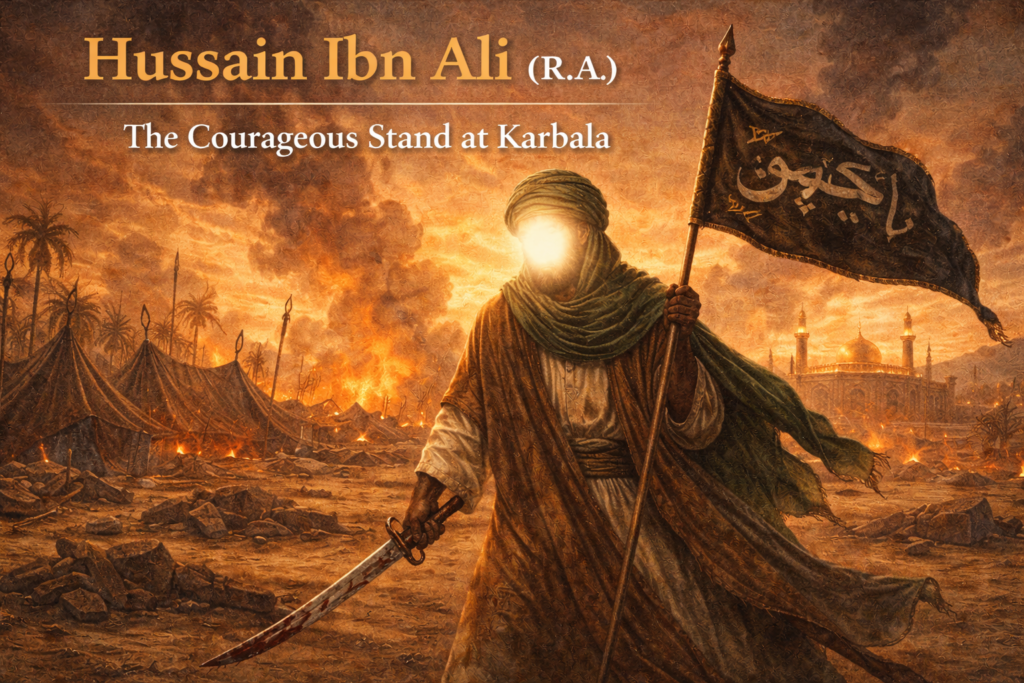
The events that unfolded at Karbala in the year 680 CE mark a defining moment in Islamic history. It was here that Hussain Ibn Ali (R.A), the grandson of the Prophet Muhammad (peace be upon him), made a courageous stand against the oppressive regime of Yazid Ibn Muawiya. This blog will shed light on Hussain Ibn Ali’s (R.A) arrival at Karbala and the circumstances surrounding him as he established his camp, a pivotal moment in the history of Islam.
Read More: 27 Safar: Prophet Muhammad (PBUH) Hijra to Medina
Hussain Ibn Ali’s (R.A) Journey to Karbala Background and Motivation: Hussain Ibn Ali (R.A) The son of Ali Ibn Abi Talib would be: “Ali Ibn Abi Talib’s offspring”The son of Ali Ibn Abi Talib would be: “Ali Ibn Abi Talib’s offspring” or “The child of Ali Ibn Abi Talib. and Fatimah bint Muhammad (R.A). He was born in 626 CE and grew up in a deeply spiritual environment, nurtured by the teachings and values of his grandfather, the Prophet Muhammad (peace be upon him).
After the death of his brother Hasan Ibn Ali (R.A), Hussain found himself at the center of a struggle for leadership in the Muslim community. The Rise of Yazid: After the death of his father, Muawiya Ibn Abi Sufyan, Yazid Ibn Muawiya assumed the leadership of the Umayyad Caliphate. His rule was marked by corruption and deviation from the principles of Islam. Hussain (R.A) refused to pledge allegiance to Yazid due to his concerns about the Umayyad regime’s un-Islamic practices. Journey to Kufa: In response to appeals from the people of Kufa, Hussain (R.A) decided to embark on a journey to Kufa to lead the opposition against Yazid’s tyrannical rule.
His journey was accompanied by family members and a small group of loyal supporters. Arrival at Karbala Reaching the Banks of the Euphrates:
Hussain Ibn Ali (R.A) and his companions reached the vicinity of Karbala, located on the banks of the Euphrates River, on the 2nd of Muharram. Here, they decided to establish their camp. Surrounded by Yazid’s Forces: As news of Hussain’s (R.A) arrival spread, Yazid’s forces, led by the brutal Umar Ibn Sa’ad, began to encircle Hussain’s camp. The situation grew tense as the forces loyal to Yazid blocked access to the river, depriving Hussain’s camp of water. Stand for Justice: Despite being vastly outnumbered and facing the prospect of thirst and hardship, Hussain (R.A) and his companions remained steadfast in their commitment to justice and upholding the principles of Islam. They refused to pledge allegiance to Yazid and declared their stand against oppression. The Significance of Hussain Ibn Ali’s (R.A) Stand at Karbala Hussain Ibn Ali’s (R.A) stand at Karbala holds immense significance for Muslims and non-Muslims alike: Defiance Against Tyranny: His unwavering refusal to submit to an unjust ruler serves as a timeless symbol of resistance against tyranny and oppression. Hussain (R.A) demonstrated that principles and justice are worth sacrificing for. Preservation of Islamic Values: His stand was not just a political struggle; it was a principled stand to preserve the true values of Islam. Hussain (R.A) sought to protect the message of the Prophet Muhammad (peace be upon him) from distortion and deviation. Inspiration for Generations: The sacrifice of Hussain (R.A) continues to inspire generations of Muslims to stand up for justice, even in the face of adversity. His story teaches us that righteousness and truth should never be compromised. Conclusion Hussain Ibn Ali’s (R.A) entry into Karbala and the establishment of his camp were pivotal moments in Islamic history. His courageous stand against Yazid’s oppressive regime serves as a timeless example of unwavering faith, commitment to justice, and sacrifice for the principles of Islam. The legacy of Hussain Ibn Ali (R.A) continues to resonate with people worldwide, reminding us of the enduring importance of standing up against tyranny and upholding the values of justice and righteousness.
Read More: Battle of Karbala: Prisoners Enter Yazid’s Palace
عنوان: حسین ابن علی رضی اللہ عنہ: کربلا میں بہادری کا مقام
تعارف
سنہ 680 عیسوی میں کربلا میں رونما ہونے والے واقعات اسلامی تاریخ کے ایک اہم لمحے کی نشاندہی کرتے ہیں۔ یہیں پر رسول اللہ صلی اللہ علیہ وسلم کے نواسے حسین ابن علی رضی اللہ عنہ نے یزید ابن معاویہ کی جابر حکومت کے خلاف دلیرانہ موقف اپنایا۔ یہ بلاگ حسین ابن علی (رضی اللہ عنہ) کی کربلا میں آمد اور ان کے ارد گرد کے حالات پر روشنی ڈالے گا جب انہوں نے اپنا کیمپ قائم کیا، جو کہ اسلام کی تاریخ کا ایک اہم لمحہ ہے۔
حسین ابن علی رضی اللہ عنہ کا کربلا کا سفر
پس منظر اور تحریک: حسین ابن علی (رضی اللہ عنہ) علی ابن ابی طالب کے بیٹے ہوں گے: “علی ابن ابی طالب کی اولاد” علی ابن ابی طالب کا بیٹا ہوگا: “علی ابن ابی طالب کی اولاد” یا “علی کی اولاد” ابن ابی طالب اور فاطمہ بنت محمد (رضی اللہ عنہا)۔ وہ 626 عیسوی میں پیدا ہوئے اور ایک گہرے روحانی ماحول میں پلے بڑھے، اپنے دادا حضرت محمد صلی اللہ علیہ وسلم کی تعلیمات اور اقدار سے پروان چڑھے۔ وفات کے بعد۔ اپنے بھائی حسن ابن علی (رضی اللہ عنہ) کے، حسین نے خود کو مسلم کمیونٹی میں قیادت کی جدوجہد کے مرکز میں پایا۔
یزید کا عروج: اپنے والد معاویہ ابن ابی سفیان کی وفات کے بعد یزید ابن معاویہ نے اموی خلافت کی قیادت سنبھالی۔ ان کی حکمرانی میں بدعنوانی اور اسلام کے اصولوں سے انحراف تھا۔ حسین (رضی اللہ عنہ) نے اموی حکومت کے غیر اسلامی طریقوں کے بارے میں خدشات کی وجہ سے یزید کی بیعت کرنے سے انکار کردیا۔
کوفہ کا سفر: اہل کوفہ کی اپیلوں کے جواب میں حسین رضی اللہ عنہ نے یزید کی ظالم حکومت کے خلاف اپوزیشن کی قیادت کے لیے کوفہ کا سفر شروع کرنے کا فیصلہ کیا۔ اس کے سفر میں خاندان کے افراد اور وفادار حامیوں کا ایک چھوٹا گروپ بھی ساتھ تھا۔
کربلا پہنچنا
فرات کے کنارے پہنچنا: حسین ابن علی (رض) اور ان کے ساتھی 2 محرم کو دریائے فرات کے کنارے واقع کربلا کے قریب پہنچے۔ یہاں انہوں نے اپنا کیمپ قائم کرنے کا فیصلہ کیا۔
یزید کی افواج کا گھیراؤ: حسین (رضی اللہ عنہ) کی آمد کی خبر پھیلتے ہی یزید کی فوجوں نے، سفاک عمر بن سعد کی قیادت میں، حسین کے کیمپ کو گھیرے میں لینا شروع کردیا۔ صورتحال کشیدہ ہوگئی کیونکہ یزید کی وفادار افواج نے حسین کے کیمپ کو پانی سے محروم کرتے ہوئے دریا تک رسائی روک دی۔
انصاف کے لیے کھڑے ہونا: بہت زیادہ تعداد میں ہونے کے باوجود اور پیاس اور مشکلات کا سامنا کرنے کے باوجود، حسین رضی اللہ عنہ اور ان کے ساتھی انصاف کے لیے اپنے عزم اور اسلام کے اصولوں کی پاسداری میں ثابت قدم رہے۔ انہوں نے یزید کی بیعت سے انکار کر دیا اور ظلم کے خلاف اپنے موقف کا اعلان کیا۔
حسین ابن علی رضی اللہ عنہ کے کربلا میں کھڑے ہونے کی اہمیت
حسین ابن علی رضی اللہ عنہ کا کربلا میں کھڑا ہونا مسلمانوں اور غیر مسلموں کے لیے یکساں اہمیت رکھتا ہے:
ظلم کے خلاف دفاع: ایک ظالم حکمران کے سامنے سر تسلیم خم کرنے سے اس کا اٹل انکار ظلم اور جبر کے خلاف مزاحمت کی لازوال علامت کے طور پر کام کرتا ہے۔ حسین (رضی اللہ عنہ) نے ثابت کیا کہ اصول اور انصاف کے لیے قربانیاں قابل قدر ہیں۔
اسلامی اقدار کا تحفظ: ان کا موقف محض سیاسی جدوجہد نہیں تھا۔ یہ اسلام کی حقیقی اقدار کے تحفظ کے لیے ایک اصولی موقف تھا۔ حسین رضی اللہ عنہ نے رسول اللہ صلی اللہ علیہ وسلم کے پیغام کو تحریف اور انحراف سے بچانے کی کوشش کی۔
نسلوں کے لیے تحریک: حسین (رضی اللہ عنہ) کی قربانی مسلمانوں کی نسلوں کو مشکلات کے باوجود انصاف کے لیے کھڑے ہونے کی ترغیب دے رہی ہے۔ اس کی کہانی ہمیں سکھاتی ہے کہ صداقت اور سچائی پر کبھی سمجھوتہ نہیں کرنا چاہیے۔
نتیجہ
حسین ابن علی (رضی اللہ عنہ) کا کربلا میں داخل ہونا اور ان کے کیمپ کا قیام اسلامی تاریخ کے اہم لمحات تھے۔ یزید کی جابرانہ حکومت کے خلاف ان کا دلیرانہ موقف غیر متزلزل ایمان، انصاف کے عزم اور اسلام کے اصولوں کے لیے قربانی کی لازوال مثال ہے۔ حسین ابن علی (رضی اللہ عنہ) کی میراث دنیا بھر کے لوگوں کے ساتھ گونجتی رہتی ہے، جو ہمیں ظلم کے خلاف کھڑے ہونے اور عدل و انصاف کی اقدار کو برقرار رکھنے کی لازوال اہمیت کی یاد دلاتی ہے۔