
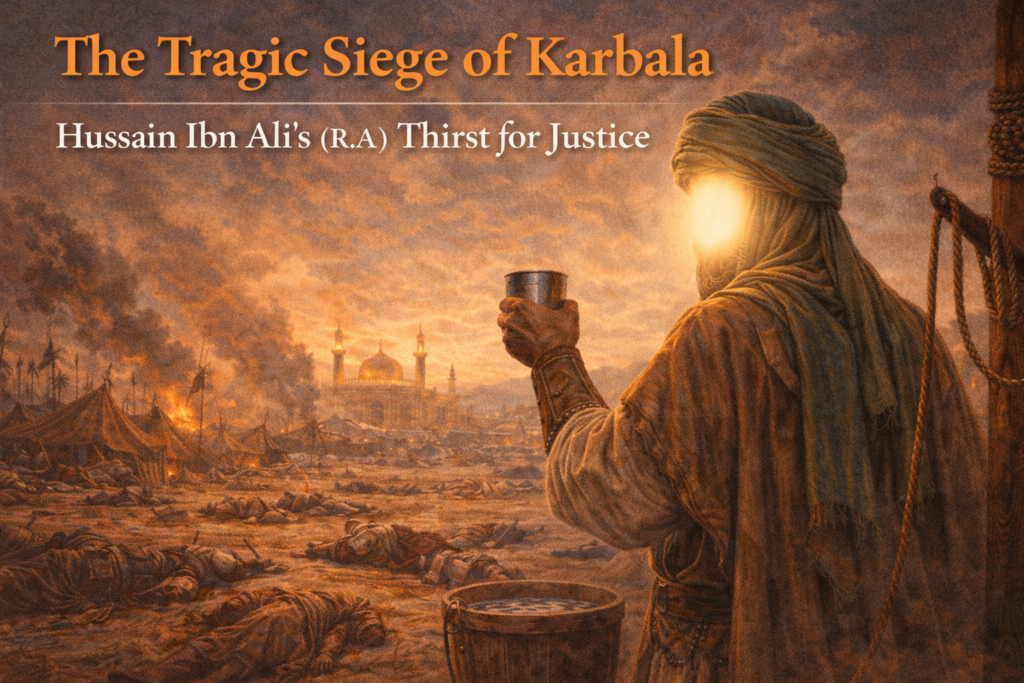
The Tragic Siege of Karbala: Hussain Ibn Ali’s (R.A) Thirst for Justice
Introduction
The events that transpired at Karbala in the year 680 CE represent one of the most heart-wrenching chapters in Islamic history. Among the many agonies endured by Hussain Ibn Ali (R.A) and his followers during their stand against Yazid’s oppressive regime, one of the most poignant is the denial of access to water. In this blog, we will explore the harrowing circumstances surrounding the ban on water for Hussain Ibn Ali (R.A) and its profound significance.
Read More: Umar ibn Khattab (RA): Death Anniversary & Legacy
The Context: Hussain Ibn Ali’s (R.A) Stand Against Yazid’s Rule
Before delving into the denial of water, it’s crucial to understand the broader context of Hussain Ibn Ali’s (R.A) stand against Yazid’s rule:
- Yazid’s Unjust Ascension: After the death of his father, Muawiya Ibn Abi Sufyan, Yazid Ibn Muawiya assumed leadership of the Umayyad Caliphate. His rule was marked by corruption and deviation from Islamic principles. This led Hussain Ibn Ali (R.A) to reject his legitimacy and stand up for justice and the preservation of true Islamic values.
- The Journey to Kufa: Hussain Ibn Ali (R.A) received appeals from the people of Kufa to lead the opposition against Yazid’s oppressive regime. He embarked on a journey to Kufa accompanied by family members and supporters, hoping to bring about positive change in the Muslim community.
The Denial of Water at Karbala
As Hussain Ibn Ali (R.A) and his companions arrived at the plains of Karbala, the situation grew dire:
- Surrounded by Yazid’s Forces: News of Hussain’s (R.A) arrival at Karbala spread, and Yazid’s forces, led by Umar Ibn Sa’ad, began to encircle his camp. The oppressive forces far outnumbered Hussain’s small band of followers.
- Thirst and Desperation: One of the most excruciating aspects of the siege at Karbala was the denial of access to the Euphrates River, located nearby. Yazid’s forces strategically blocked Hussain’s camp from reaching the river, subjecting them to intense thirst under the scorching sun.
- Hussain’s (R.A) Compassion: Despite the dire circumstances, Hussain Ibn Ali (R.A) remained resolute in his commitment to justice and compassion. He repeatedly offered peace and reconciliation to Yazid’s forces, seeking to avoid bloodshed, even in his state of thirst.
The Profound Significance
The denial of water at Karbala carries profound lessons and significance:
- Test of Faith: The denial of water was not just a physical hardship but a severe test of faith and endurance. It showcased the unwavering commitment of Hussain Ibn Ali (R.A) and his companions to their principles.
- Thirst for Justice: The physical thirst endured by Hussain (R.A) and his followers serves as a metaphor for their unquenchable thirst for justice and righteousness. They were willing to endure the harshest of conditions for the sake of upholding Islamic values.
- Symbol of Oppression: The denial of water symbolizes the cruelty and oppression faced by Hussain (R.A) and his camp at the hands of Yazid’s regime. It highlights the brutality of those who sought to suppress the voice of truth and justice.
Conclusion
The denial of water to Hussain Ibn Ali (R.A) at Karbala is a heart-rending chapter in Islamic history, highlighting the sacrifices made in the name of justice and righteousness. It serves as a reminder of the enduring significance of Hussain Ibn Ali’s (R.A) stand against oppression and his unwavering commitment to preserving the true values of Islam. His legacy continues to inspire generations, emphasizing the importance of standing up for justice, even in the face of the most severe hardships.
Read More: Hussain Ibn Ali (R.A): The Courageous Stand at Karbala
عنوان: کربلا کا المناک محاصرہ: حسین ابن علی رضی اللہ عنہ کی انصاف کی پیاس
تعارف
680 عیسوی میں کربلا میں رونما ہونے والے واقعات اسلامی تاریخ کے سب سے زیادہ دل کو چھو لینے والے بابوں میں سے ایک ہیں۔ حسین ابن علی (رضی اللہ عنہ) اور ان کے پیروکاروں نے یزید کی جابرانہ حکومت کے خلاف اپنے موقف کے دوران جو بہت سی اذیتیں برداشت کیں، ان میں سے ایک سب سے زیادہ اذیت ناک پانی تک رسائی سے انکار ہے۔ اس بلاگ میں، ہم حسین ابن علی (رض) کے لیے پانی پر پابندی اور اس کی گہری اہمیت کے ارد گرد کے پریشان کن حالات کا جائزہ لیں گے۔
سیاق و سباق: یزید کی حکومت کے خلاف حسین ابن علی رضی اللہ عنہ کا موقف
پانی کے انکار پر غور کرنے سے پہلے یزید کی حکومت کے خلاف حسین ابن علی (رضی اللہ عنہ) کے موقف کے وسیع تناظر کو سمجھنا ضروری ہے:
یزید کا غیر منصفانہ عروج: اپنے والد معاویہ ابن ابی سفیان کی وفات کے بعد یزید ابن معاویہ نے خلافت اموی کی قیادت سنبھالی۔ ان کی حکمرانی میں بدعنوانی اور اسلامی اصولوں سے انحراف تھا۔ اس کی وجہ سے حسین ابن علی (رضی اللہ عنہ) نے اپنی قانونی حیثیت کو مسترد کر دیا اور انصاف اور حقیقی اسلامی اقدار کے تحفظ کے لیے کھڑے ہو گئے۔
کوفہ کا سفر: حسین ابن علی رضی اللہ عنہ کو اہل کوفہ کی طرف سے یزید کی جابرانہ حکومت کے خلاف اپوزیشن کی قیادت کرنے کی اپیلیں موصول ہوئیں۔ انہوں نے خاندان کے افراد اور حامیوں کے ہمراہ کوفہ کا سفر شروع کیا، اس امید پر کہ وہ مسلم کمیونٹی میں مثبت تبدیلی لائیں گے۔
کربلا میں پانی کا انکار
جیسے ہی حسین ابن علی (رضی اللہ عنہ) اور ان کے ساتھی میدان کربلا میں پہنچے تو صورتحال سنگین ہوگئی:
یزید کی فوجوں کا گھیراؤ: حسین (رضی اللہ عنہ) کی کربلا میں آمد کی خبر پھیل گئی اور عمر بن سعد کی قیادت میں یزید کی فوجوں نے ان کے کیمپ کو گھیرے میں لینا شروع کردیا۔ ظالم قوتیں حسین کے پیروکاروں کے چھوٹے گروہ سے کہیں زیادہ تھیں۔
پیاس اور مایوسی: کربلا کے محاصرے کے سب سے پریشان کن پہلوؤں میں سے ایک قریب ہی واقع دریائے فرات تک رسائی سے انکار تھا۔ یزید کی فوجوں نے حکمت عملی کے ساتھ حسین کے کیمپ کو دریا تک پہنچنے سے روک دیا اور انہیں چلچلاتی دھوپ میں شدید پیاس کا نشانہ بنایا۔
حسین (رضی اللہ عنہ) کی ہمدردی: سنگین حالات کے باوجود، حسین ابن علی (رضی اللہ عنہ) انصاف اور ہمدردی کے اپنے عزم پر قائم رہے۔ اس نے پیاس کی حالت میں بھی خونریزی سے بچنے کے لیے بار بار یزید کی افواج کو امن اور مصالحت کی پیشکش کی۔
گہری اہمیت
کربلا میں پانی کا انکار گہرے اسباق اور اہمیت کا حامل ہے:
ایمان کا امتحان: پانی کا انکار محض جسمانی مشقت ہی نہیں بلکہ ایمان اور برداشت کا سخت امتحان تھا۔ اس میں حسین ابن علی (رضی اللہ عنہ) اور ان کے ساتھیوں کی اپنے اصولوں کے ساتھ غیر متزلزل وابستگی کو ظاہر کیا گیا۔
انصاف کی پیاس: حسین (رضی اللہ عنہ) اور ان کے پیروکاروں کی جسمانی پیاس انصاف اور راستبازی کے لیے ان کی نہ بجھنے والی پیاس کا استعارہ ہے۔ وہ اسلامی اقدار کی سربلندی کے لیے سخت ترین حالات برداشت کرنے کو تیار تھے۔
ظلم کی علامت: پانی کا انکار یزید کی حکومت کے ہاتھوں حسین (رضی اللہ عنہ) اور ان کے کیمپ کو درپیش ظلم و جبر کی علامت ہے۔ یہ ان لوگوں کی بربریت کو اجاگر کرتا ہے جنہوں نے حق اور انصاف کی آواز کو دبانے کی کوشش کی۔
نتیجہ
کربلا میں حسین ابن علی رضی اللہ عنہ کو پانی کا انکار اسلامی تاریخ کا ایک دلخراش باب ہے جو عدل و انصاف کے نام پر دی گئی قربانیوں کو اجاگر کرتا ہے۔ یہ ظلم کے خلاف حسین ابن علی (رضی اللہ عنہ) کے مؤقف اور اسلام کی حقیقی اقدار کے تحفظ کے لیے ان کے غیر متزلزل عزم کی دیرپا اہمیت کی یاد دہانی کا کام کرتا ہے۔ اس کی میراث نسلوں کو متاثر کرتی رہتی ہے، یہاں تک کہ سخت ترین مشکلات کے باوجود انصاف کے لیے کھڑے ہونے کی اہمیت پر زور دیتی ہے۔