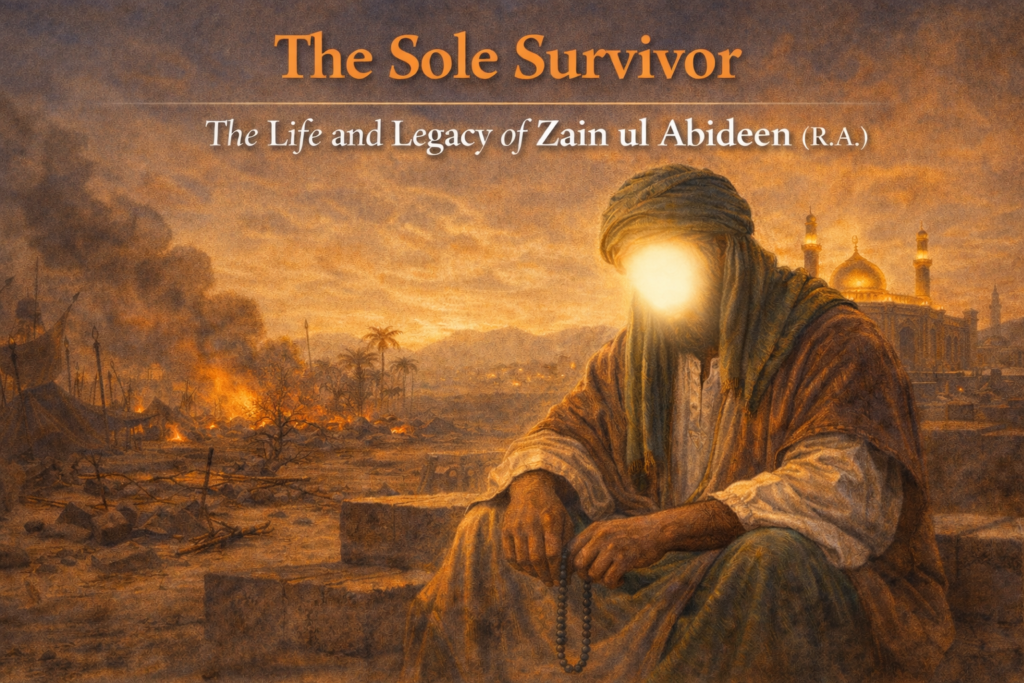
The Sole Survivor: The Martyrdom of Zain Ul Abideen (R.A)
Introduction
The Battle of Karbala in the year 680 CE is a poignant chapter in Islamic history, marked by the unwavering devotion and sacrifice of Hussain Ibn Ali (R.A) and his companions. Among the survivors of this tragic event was Zain Ul Abideen (R.A), the son of Hussain Ibn Ali (R.A), who played a pivotal role in preserving the legacy of Karbala. In this blog, we will delve into the martyrdom of Zain Ul Abideen (R.A), the lone survivor of Karbala, and his profound contributions to Islam.
Read More: 18 Rabī‘ al-Awwal: The Birth of Umm Kulthum bint Ali – A Noble Legacy
The Battle of Karbala: A Tragic Prelude
Before we explore the life and martyrdom of Zain Ul Abideen (R.A), it is essential to understand the context and events leading up to the battle:
- Yazid’s Tyrannical Rule: After Yazid Ibn Muawiya’s ascension to the Umayyad Caliphate, his oppressive and un-Islamic practices led to widespread discontent among Muslims. Hussain Ibn Ali (R.A) received numerous pleas for help and calls to lead the opposition against Yazid’s regime.
- Hussain’s Stand for Justice: Responding to the appeals of the people of Kufa, Hussain Ibn Ali (R.A) embarked on a journey to confront Yazid’s unjust rule. Accompanied by his family members and loyal supporters, he reached Karbala, where a confrontation with Yazid’s forces became inevitable.
The Martyrdom of Zain Ul Abideen (R.A)
- Surviving the Tragedy: Zain Ul Abideen (R.A), whose birth name was Ali Ibn Hussain, was the son of Hussain Ibn Ali (R.A) and his mother, Umm Farwah, was a noble and pious woman. During the battle, while almost all male members of the Prophet’s (peace be upon him) family were martyred, Zain Ul Abideen (R.A) miraculously survived due to illness, which had weakened him.
- Captive and Witness: Zain Ul Abideen (R.A) was taken captive by Yazid’s forces following the Battle of Karbala. As a witness to the atrocities committed against his family and supporters, he bore the heavy burden of narrating the tragic events of Karbala to the world, ensuring that the sacrifice of his family was not in vain.
- Advocate for Justice: Despite his physical weakness, Zain Ul Abideen (R.A) fearlessly advocated for justice and truth. He continued the legacy of his father and grandfather by refusing to pledge allegiance to Yazid. His unwavering stance inspired many to question Yazid’s legitimacy.
- Prayers and Supplication: Zain Ul Abideen (R.A) is renowned for his profound supplications and prayers, especially his “Sahifa Sajjadiya” or “The Psalms of Islam,” a collection of deeply spiritual and profound prayers. These supplications provide guidance and inspiration for Muslims seeking a deeper connection with Allah.
Legacy and Significance
The martyrdom of Zain Ul Abideen (R.A) is a testament to the resilience and unwavering faith of the Ahl al-Bayt (the family of the Prophet) in the face of extreme adversity. His contributions to Islam and his role in preserving the memory of Karbala are of immense significance:
- Preserving the Karbala Legacy: Zain Ul Abideen (R.A) played a crucial role in ensuring that the events of Karbala were not forgotten. His firsthand accounts and impassioned speeches kept the memory of Karbala alive, inspiring generations to uphold justice and resist oppression.
- Spiritual Legacy: His prayers and supplications, encapsulated in the Sahifa Sajjadiya, are a spiritual treasure for Muslims. They provide guidance on worship, devotion, and maintaining a strong connection with Allah.
- Symbol of Resilience: Zain Ul Abideen (R.A) remains a symbol of resilience, patience, and faith in the face of adversity. His example encourages believers to maintain their faith and principles, even in challenging circumstances.
Conclusion
The martyrdom of Zain Ul Abideen (R.A), the only survivor of the Battle of Karbala, is a profound chapter in Islamic history. His unwavering commitment to justice, his preservation of the legacy of Karbala, and his spiritual contributions continue to inspire Muslims worldwide. Zain Ul Abideen (R.A) serves as a beacon of resilience and faith, reminding us of the enduring importance of upholding justice, truth, and the values of Islam, even in the most trying of times.
Read More: Battle of Karbala: Prisoners Enter Yazid’s Palace
عنوان: واحد زندہ بچ جانے والا: زین العابدین رضی اللہ عنہ کی شہادت
تعارف
680 عیسوی میں ہونے والی کربلا کی جنگ اسلامی تاریخ کا ایک تابناک باب ہے، جو حسین ابن علی (رضی اللہ عنہ) اور ان کے ساتھیوں کی غیر متزلزل عقیدت اور قربانی سے نشان زد ہے۔ اس المناک واقعے میں زندہ بچ جانے والوں میں حسین ابن علی رضی اللہ عنہ کے فرزند زین العابدین رضی اللہ عنہ بھی تھے جنہوں نے کربلا کی میراث کو بچانے میں اہم کردار ادا کیا۔ اس بلاگ میں، ہم کربلا کے واحد زندہ بچ جانے والے زین العابدین (رضی اللہ عنہ) کی شہادت اور اسلام کے لیے ان کی گراں قدر خدمات کا جائزہ لیں گے۔
کربلا کی جنگ: ایک المناک پیش کش
اس سے پہلے کہ ہم زین العابدین رضی اللہ عنہ کی زندگی اور شہادت کو تلاش کریں، جنگ سے پہلے کے سیاق و سباق اور واقعات کو سمجھنا ضروری ہے:
یزید کا ظالمانہ حکومت: یزید ابن معاویہ کے اموی خلافت پر چڑھنے کے بعد، اس کے جابرانہ اور غیر اسلامی طرز عمل نے مسلمانوں میں بڑے پیمانے پر عدم اطمینان پیدا کیا۔ حسین ابن علی (رضی اللہ عنہ) کو یزید کی حکومت کے خلاف اپوزیشن کی قیادت کرنے کے لیے مدد کے لیے بے شمار درخواستیں موصول ہوئیں۔
حسین کا انصاف کے لیے موقف: اہل کوفہ کی اپیلوں کا جواب دیتے ہوئے، حسین ابن علی رضی اللہ عنہ نے یزید کی ظالمانہ حکومت کا مقابلہ کرنے کے لیے سفر کا آغاز کیا۔ اپنے خاندان کے افراد اور وفادار حامیوں کے ساتھ وہ کربلا پہنچے، جہاں یزید کی افواج سے تصادم ناگزیر ہو گیا۔
شہادت زین العابدین رضی اللہ عنہ
سانحہ سے بچنا: زین العابدین رضی اللہ عنہ جن کا پیدائشی نام علی ابن حسین تھا، حسین ابن علی رضی اللہ عنہ کے بیٹے تھے اور ان کی والدہ ام فروہ ایک شریف اور پرہیزگار خاتون تھیں۔ جنگ کے دوران، جب کہ رسول اللہ صلی اللہ علیہ وسلم کے خاندان کے تقریباً تمام مرد افراد شہید ہو گئے، زین العابدین رضی اللہ عنہ بیماری کی وجہ سے معجزانہ طور پر بچ گئے، جس کی وجہ سے وہ کمزور ہو گئے تھے۔
اسیر اور گواہ: زین العابدین رضی اللہ عنہ کو کربلا کی جنگ کے بعد یزید کی افواج نے اسیر کر لیا۔ اپنے خاندان اور حامیوں پر ہونے والے مظالم کے گواہ کے طور پر، اس نے کربلا کے المناک واقعات کو دنیا کے سامنے بیان کرنے کا بھاری بوجھ اٹھایا، اس بات کو یقینی بنایا کہ ان کے خاندان کی قربانی رائیگاں نہ جائے۔
وکیل برائے انصاف: اپنی جسمانی کمزوری کے باوجود، زین العابدین (رضی اللہ عنہ) نے بے خوف ہوکر انصاف اور سچائی کی وکالت کی۔ اس نے یزید کی بیعت سے انکار کرکے اپنے والد اور دادا کی میراث کو جاری رکھا۔ اس کے غیر متزلزل موقف نے بہت سے لوگوں کو یزید کی قانونی حیثیت پر سوال اٹھانے کی ترغیب دی۔
دعائیں اور دعائیں: زین العابدین (رضی اللہ عنہ) اپنی گہری دعاؤں اور دعاؤں کے لیے مشہور ہیں، خاص طور پر ان کی “صحیفہ سجادیہ” یا “اسلام کے زبور”، گہری روحانی اور گہری دعاؤں کا مجموعہ۔ یہ دعائیں اللہ کے ساتھ گہرا تعلق تلاش کرنے والے مسلمانوں کے لیے رہنمائی اور تحریک فراہم کرتی ہیں۔
میراث اور اہمیت
زین العابدین (رضی اللہ عنہ) کی شہادت اہل بیت (علیہم السلام) کے سخت ترین حالات میں استقامت اور غیر متزلزل ایمان کا منہ بولتا ثبوت ہے۔ اسلام میں ان کی خدمات اور کربلا کی یاد کو محفوظ رکھنے میں ان کا کردار بہت اہمیت کا حامل ہے:
کربلا کی میراث کا تحفظ: زین العابدین رضی اللہ عنہ نے کربلا کے واقعات کو فراموش نہ کرنے میں اہم کردار ادا کیا۔ ان کے خود ساختہ بیانات اور پرجوش تقاریر نے کربلا کی یاد کو زندہ رکھا، جو نسلوں کو انصاف کی بالادستی اور ظلم کے خلاف مزاحمت کرنے کی تحریک دیتی ہے۔
روحانی میراث: ان کی دعائیں اور مناجات، جو صحیفہ سجادیہ میں موجود ہیں، مسلمانوں کے لیے ایک روحانی خزانہ ہیں۔ وہ عبادت، عقیدت، اور اللہ کے ساتھ مضبوط تعلق برقرار رکھنے کے بارے میں رہنمائی فراہم کرتے ہیں۔
لچک کی علامت: زین العابدین (رضی اللہ عنہ) مصیبت کے وقت صبر، استقامت اور ایمان کی علامت ہیں۔ اس کی مثال مومنوں کو اپنے ایمان اور اصولوں کو برقرار رکھنے کی ترغیب دیتی ہے، یہاں تک کہ مشکل حالات میں۔
نتیجہ
غزوہ کربلا کے واحد زندہ بچ جانے والے زین العابدین رضی اللہ عنہ کی شہادت اسلامی تاریخ کا ایک گہرا باب ہے۔ انصاف کے لیے ان کی غیر متزلزل وابستگی، کربلا کی میراث کے تحفظ اور ان کی روحانی خدمات دنیا بھر کے مسلمانوں کو متاثر کرتی رہیں۔ زین العابدین (رضی اللہ عنہ) لچک اور ایمان کی روشنی کے طور پر کام کرتے ہیں، جو ہمیں انصاف، سچائی اور اسلام کی اقدار کو برقرار رکھنے کی لازوال اہمیت کی یاد دلاتا ہے، یہاں تک کہ مشکل ترین اوقات میں بھی۔